

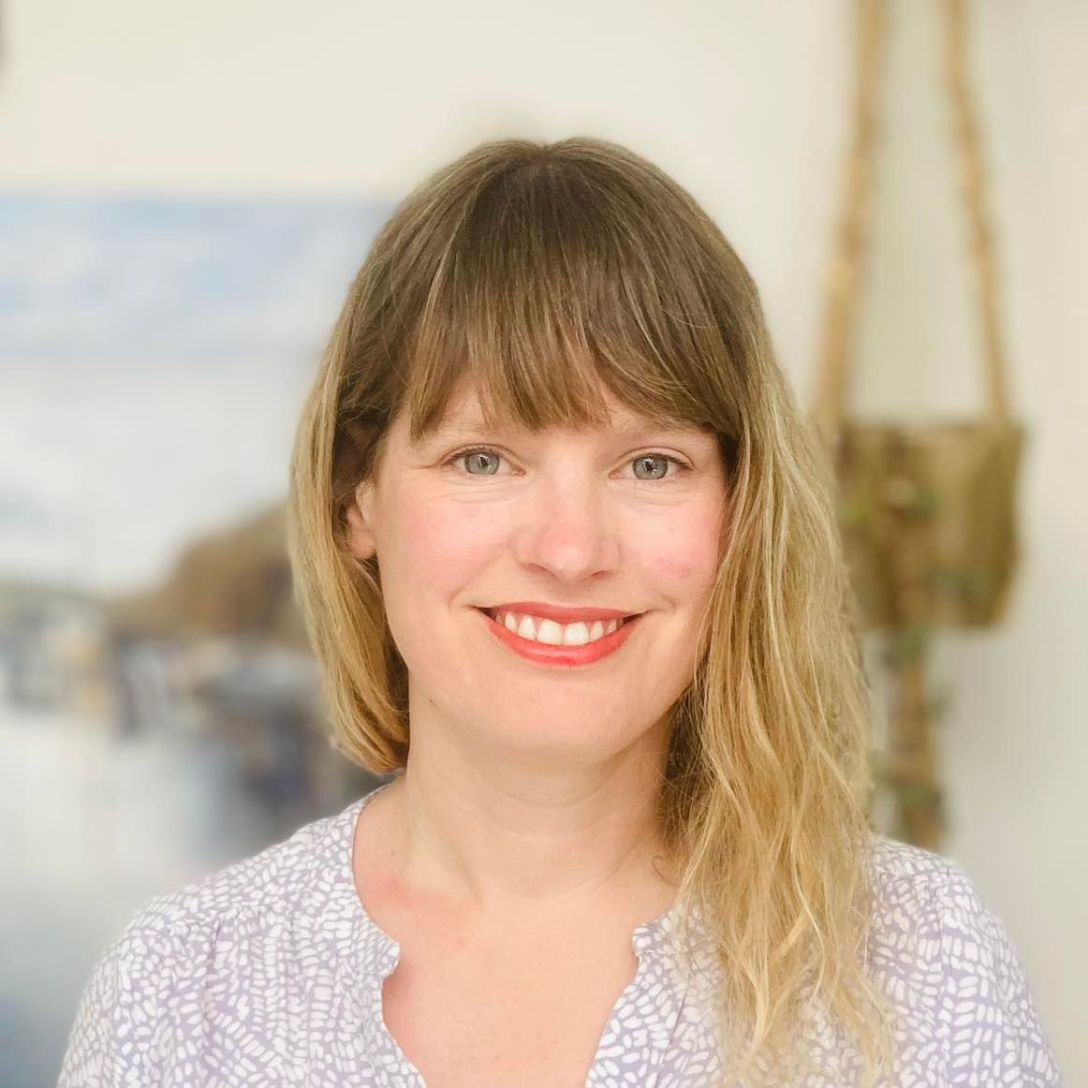
I enjoyed LK Wilde’s debut novel, Silver Darlings, so much that I recommended it to our local book group here in Stamford. It is the first of the Watson Family Saga series published in 2021. She followed this with a true story of her relative “Queenie of Norwich” which is a fascinating account of an amazing lady. It currently has 4,242 reviews on Amazon. Since then, she has written several books which she describes as “feel good Cornish fiction” – details of all her books can be found on her website www.lkwilde.com She continues to go from strength to strength and recently published book 3 of the Watson family saga.
Fb: @LKWilde
Instagram @lkwildeauthor
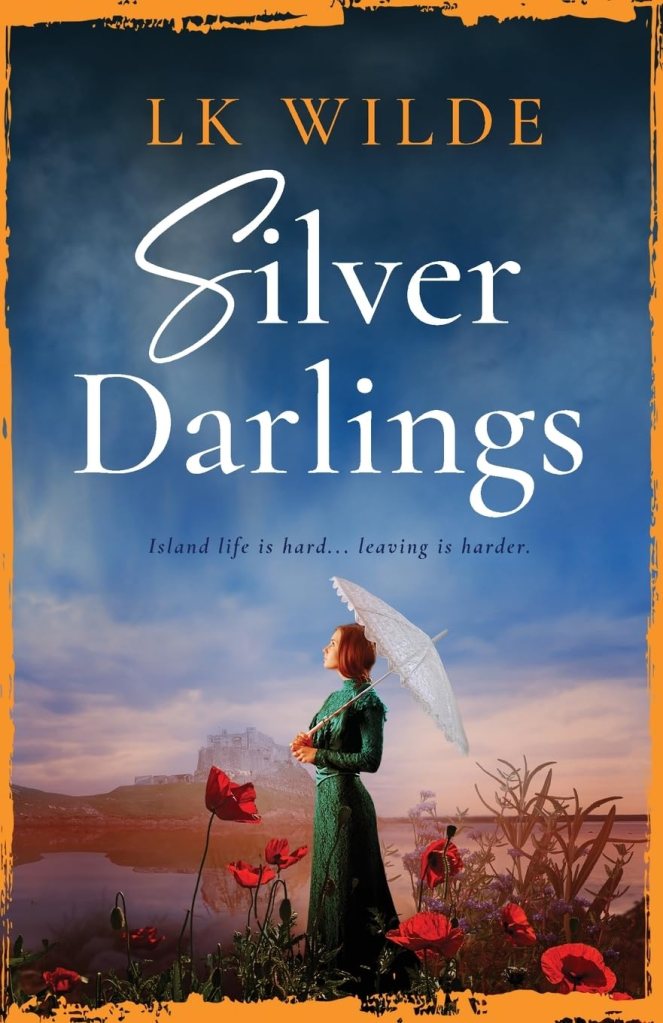
LK Wilde, thank you very much for agreeing to be my third “In Conversation” guest interviewee. Welcome to Lorna’s Command Centre.
Thank you for inviting me.
Let’s begin at the beginning – Did you read a lot as a child?
Yes, I did. I remember Famous Five and later the Nancy Drew books being particular favourites. I have very happy memories of my dad lying on the bottom bunk bed and reading to me and my sister before bed each night.
What is your favourite childhood book? Do you still have it?
I loved the Katie Morag picture books as a child so later collected the complete set. I was living on an island at the time so I think it was the illustrations and tales of island life which appealed. I have no idea where those books are now though. During lockdown I bought the entire Famous Five collection and worked my way through them with my youngest son. I think he was most impressed by the huge amount of tasty food the characters get through! As you can see below, I also loved the Famous Five.

What are you reading now?
I’m currently reading Hidden Depths by Ann Cleeves. My mum has recently been on an Ann Cleeves shopping spree so is passing all the books along to me as she finishes them.
I’m assuming before you began writing that you were, and probably still are, an avid reader. Do you have a favourite author?
Yes, Ann Cleeves!
Can you tell us why you like her?
Aside from the plots which make her books hard to put down, I love the honest, ‘realness’ of her characters. The bad guys in Ann Cleeves novels are never truly bad, there is a depth to them that makes you understand their actions, however awful. I love the Northumbrian settings of the Vera books and how these are brought to life on the page. I’d describe Ann Cleeves books as my reading comfort blanket, I become completely absorbed in her books, and that’s just what I want when reading!
Did you always know you wanted to be an author? Did you write/tell stories/put on plays as a child?
When I was a child I always wanted to be an author and used to carry an A4 notebook around with me writing stories, but when I hit my teenage years music took priority. It wasn’t until the pandemic interrupted a big music project I’d been working on that my author dream resurfaced. Despite all that was lost during the pandemic, regaining my love of writing is something I’ll always be grateful for.
I’m sure your readers will be interested in how you write. Do you find time to write every day?
Yes, I try to. I give myself Thursdays off as I teach that day, but other than that I try to get words down on the page every day. This year I’ve moved to a weekly word count target rather than daily, to give myself more flexibility and allow myself a few more days off! When I’m in the middle of a project I become a bit obsessed, so I’m trying to find more balance and learn to step back a bit.
You sound very disciplined. What is your favourite part of the writing process?
My favourite part of writing is the first draft. I love watching a story unfold on the page and getting to know the characters. It’s a really exciting time, when the story is just for me and the self-doubt hasn’t had a chance to creep in yet.
What is the most challenging aspect of writing for you?
Finishing a book! I tend to write quite quickly, but I’ll get to the last 5% and suddenly want to move on to something else. Sometimes I’ll already have written the ending, but there’ll be a chapter in the middle that needs finishing, or a loose end to tie up.
Was there ever a moment when you felt like giving up on your writing?
Yes and no. I can’t imagine a time I’d ever stop writing, but I find sharing my work daunting. It can be very stressful releasing a book and waiting for reader’s reactions. By nature I’m an introvert, so putting something of myself out into the world can be a challenge and I sometimes wonder why I do it!
The business side of writing can also be really tough. Self-promotion doesn’t come easily to me, but is a necessary evil if I want people to read my books, so I keep going.
How do you balance writing with the demands of a day job?
I’m fortunate that writing is my main job these days. I put in full-time hours writing, but keep two part-time jobs on the side for financial security. By profession I’m a teacher, but these days I just keep my hand in by working one day a week. I also work a few hours a week as a cleaner and love my cleaning job as it gets me out of the house and chatting with friends. I can’t see a time I’d ever want to give it up as I think sitting in my office all day every day would drive me a bit mad.
I’d like to ask you now specifically about your books. Can you describe the moment when the idea for your first book about the Watson family, Silver Darlings, came to you?
This was a strange one as Silver Darlings actually started as a memoir that I never intended to publish. I began documenting my teenage years living on an island, but quickly realised I’d have to be long gone before I’d want anyone to read it! I started looking into the island’s history, and that’s when the characters Clara and Jimmy came to me. I abandoned my memoir and instead began writing what would become my debut novel.
From what you say and in your writing I can see that islands are important to you. Do you have a favourite character in this series. If so, why do you like this character?
This is a tricky one, but if I had to pick one character, it would be Rose, Jimmy’s mother. That choice will probably surprise readers of the series as she’s not the nicest character I could have picked, but I felt she did her best in what were very trying circumstances. I’ve almost finished writing a prequel to Silver Darlings exploring Rose and Anna’s (Clara’s mother) stories and it’s given me a whole new appreciation for the hardships Rose faced.
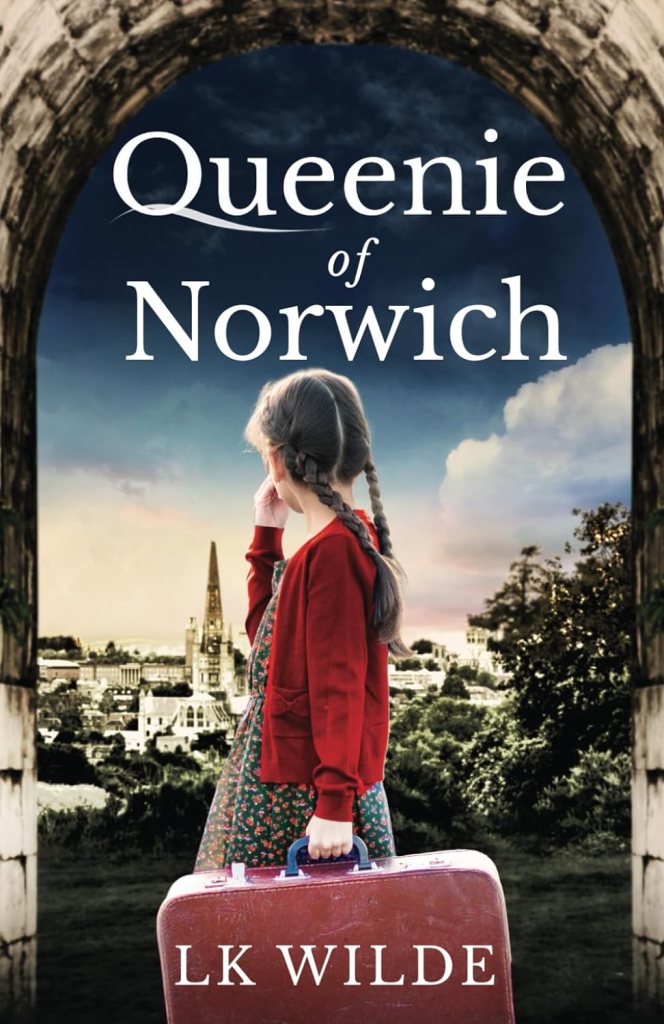
Your next book was Queenie of Norwich, is that a book you always knew you would write?
It’s not a book I knew I’d write, but it is one I’d always wanted to write. I had to make sure the family were happy for me to tell Queenie’s story, and thankfully they were. Writing the book felt like a team effort, with so many family members sharing memories and offering feedback. I couldn’t have done it without them!
Research plays a huge role in my historical fiction. I want my books to be as accurate as possible, while still leaving room for artistic licence. Newspaper articles are usually my starting point (I love the British Newspaper Archive), then I’ll move onto non-fiction books, films, YouTube videos, museum visits. My impatient nature struggles with research, but I also love it as it feels like time travel. Sometimes I’ll research a book before writing, other times I’ll research as I write (to keep my impatient nature happy!).
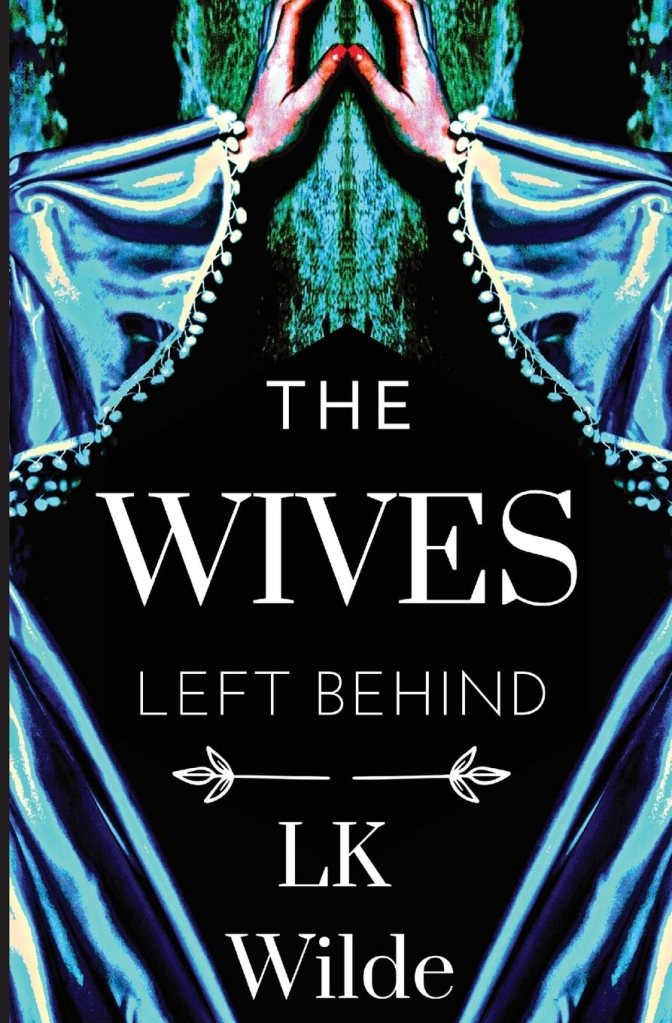
The Wives Left Behind was my hardest book to write. I was so tied by historical events and it was a real challenge to weave these into a fictional story. With other books I’ve had more freedom to pick and choose the historical events/details I include, but with The Wives Left Behind I had to stick rigidly to details of the Lightfoot brother’s trial. It was a challenge, but one I enjoyed.
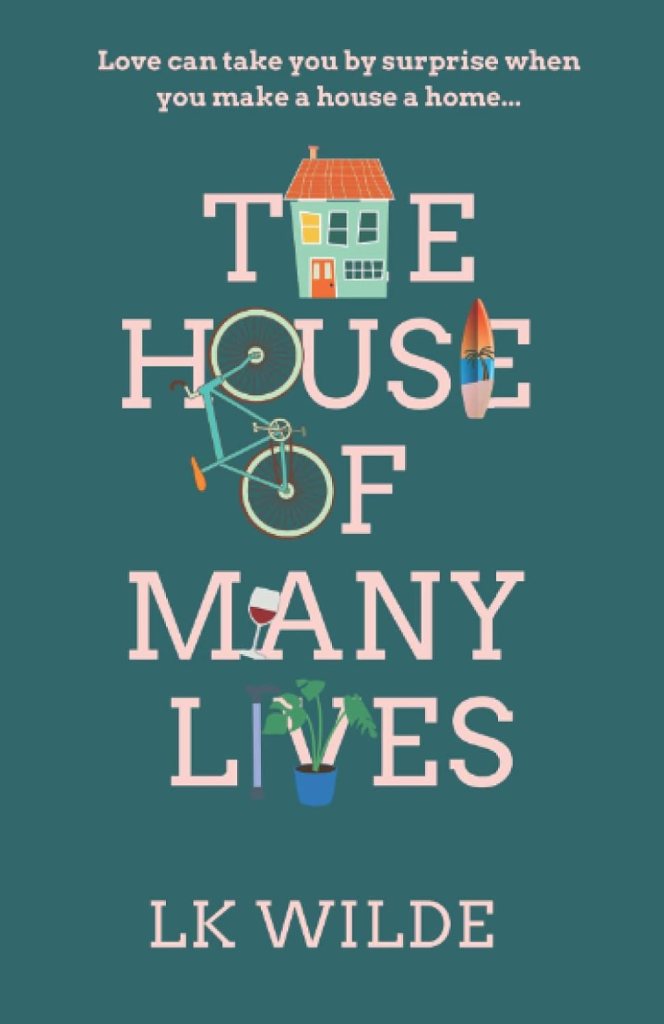
The House of Many Lives series has a contemporary setting and is described on your website as “feel good Cornish fiction”. I would agree with that. Do you plan to write further contemporary novels?
Yes, I really enjoy writing contemporary novels. They’re a great palate cleanser between historical projects and such fun to write. I find I can get completely lost in the world I’m writing about as I don’t have to keep stopping to check historical detail.
I have finished a contemporary novel which I plan to release in the autumn. It has the potential to become a series, but will be a standalone for now. It’s going to my editors next week, so we’ll see what they make of it!
At a book group talk recently I was asked about the themes in my writing and whether I had a message or messages I wanted to get across. How would you respond to such a question? Personally, I write the book then notice there might be a theme.
Looking back at my work so far, I think I’m drawn to themes of female identity, independence, and motherhood. There’s also the question of what it means to belong or find ‘home’ that runs through my work. I don’t think it’s any coincide that my book settings mirror my own ‘homes’ of Cornwall, Northumberland, and Norfolk/Suffolk. Readers may identify completely different themes to me though, who knows!
Looking to the future – how do you think you will evolve as an author over the next decade? For example, do you envisage writing in another genre?
I’d like to continue developing as an author and finding stories/ characters I feel deserve a voice. I have a number of historical projects I want to explore and have more ideas than time to write at the moment.
In terms of another genre, I do have a finished detective novel on my laptop, and this may be something I come back to in the next few years, we’ll see…
If you could interview any author living or dead who would that be and why?
Jane Austen as she was so ahead of her time!
Do you prefer to read in print or digital?
I prefer print books, but I read more on my kindle as it’s more affordable and I can read at night without needing to turn the light on.
Several of your books are available as audiobooks. Do you listen to them yourself? I never iron without an audible on the go!
I do, but I have a bad habit of falling asleep with them playing at night, even with a timer on I keep losing my place! I think we all do this.
I’ve always thought that learning an instrument, particularly as a child and in my case the piano, is really helpful for phrasing and sentence construction. Do you have any thoughts on this?
That’s such an interesting idea! Yes, I think it probably does help. It also helps with discipline, and the idea of working on something to improve it. So much of writing a book is about sitting down to write when you don’t feel like it, which bears a strong resemblance to the music practice of my youth!
What writing resources or communities do you recommend for new writers?
There are so many great writing communities online and a myriad of Facebook groups related to writing. I find the 20books group on Facebook very helpful. There are also lots of great podcasts. I enjoy the Creative Penn podcast, and have recently discovered the Bestseller Experiment which is very interesting. ‘On Writing’ by Stephen King is a must read for anyone interested in writing. I agree with you about Stephen King. It’s really down to earth and helpful.
I would like to warn new writers to beware of ‘experts’ selling courses for writing success. I get emails everyday from people trying to get me to sign up to expensive courses that offer information readily available for free online!
Is there anything else you would like to tell us about your life and work?
I’d just like to say a huge thank you to all the readers who have chosen to read my books. The support I’ve received from readers has surpassed anything I expected when I began this author life. Also thank you Lorna for inviting me to be interviewed and being such a great support to fellow authors!
Thank you very much.

 From Lorna's Command Centre