


I recently read Deborah E Wilson’s debut novel – An Artist’s Muse – after meeting her at the Retford Author’s Group retfordauthors.wordpress.com and later sharing a stand with her at the Newark Christmas market.
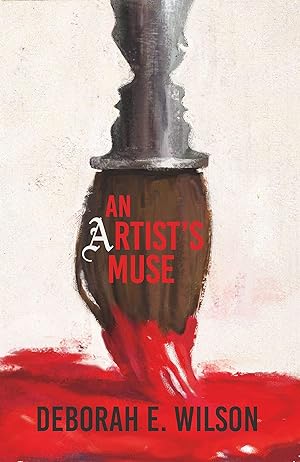
It was obvious to me from the opening paragraphs that Deborah is an accomplished literary wordsmith with excellent descriptive powers. I found this novel a captivating and unusual read so I asked her if she would engage with me for my first “In Conversation” series of interviews with authors and the professionals who support us in our endeavours.
fb: https://www.facebook.com/DEWauthorshaunt
X: https://twitter.com/DEWauthorshaunt
website: https://deborahewilsonauthor.co.uk
Deborah, thank you very much for agreeing to be my first “In Conversation” guest interviewee. Welcome to Lorna’s Command Centre.
Thank you for inviting me.
Let’s begin in the past. Did you read a lot as a child?
Yes, my parents would always read to me each night from an early age. Some of my earliest memories are of the books we read together. I continued my love of reading at school, and was fortunate to have teachers who introduced me to fantastic stories, and fostered my love of reading. At high school, again, inspiring teachers introduced me to a wealth of literature, and my natural flair for English encouraged me to continue this into my degree.
What is your favourite childhood book? Do you still have it?
One of my many favourites was a beautifully illustrated edition of The Minpins by Roald Dahl. I got rid of my original copy, having outgrown it, but have sinced purchased the same edition to read to the children I teach. Their eyes light up when they see the gorgeous illustrations, just as mine did!
What are you reading now?
I’m actually halfway through your book, Lorna, and enjoying it immensely! ‘New Beginnings on Vancouver Island’ has captured my imagination, with vivid characters and an immersive world that draws you in.
Thank you, that’s good to hear. I’m assuming before you began writing that you were, and probably still are, an avid reader. Do you have a favourite author?
One of my favourite classic authors (it’s hard to narrow them down!) is Emily Bronte. Her Gothic style has certainly influenced my writing. In terms of modern authors, I have devoured everything that Joanne Harris has written.
Can you tell us why you like her?
I love Joanne’s evocative settings and the common themes of food and drink. Experiencing a place, and often her characters, through flavours, is a brilliant way to understand it, aside from visual imagery, and I enjoy this sensory experience.
Did you always know you wanted to be an author? Did you write/tell stories/put on plays as a child?
Yes, to all of the above! I have another early memory of writing a story at primary school, which has always stayed with me. The feeling of accomplishment of having others be able to read the thoughts from my imagination was immediately addictive!
Do you find time to write every day?
Sadly not, having to have a ‘day job’, and a demanding one at that, removes the ability to find the time, or energy, for writing every day. But I am getting better at balancing the two.
Are you most inspired at a certain time of day?
Not necessarily. I am more emotionally led by my desire to write, than by external influences.
Do you have any specific writing rituals you would like to share with us?
Listening to music, specifically classical music and instrumental soundtracks, can help me reach that stage of writing ‘trance’, when the outside world melts away and all that exists is the world of the book.
Do you write chronologically – start at the beginning and work through to the end?
My plots don’t tend to be chronological, and often jump around their specific timeline. But I do work through from the ‘beginning to end’ of my novel, using a rough outline to keep me on track.
What is your favourite part of the writing process? eg getting down the first draft, editing, researching?
The first draft is my favourite, and often before I have honed the entire plot, as I feel a little more free creatively, and not bound by the end destination. But I can soon run out of steam, using this approach, and so a plot outline becomes vital.
What is the most challenging aspect of writing for you?
Purely having the time and inclination to do it, without the distraction of other aspects of my life.
Do you plot in advance or let your work evolve?
A combination of the two. I know the overall ‘shape’ of the book from the outset, but I do let the plot evolve over time, and only sketch out the entire thing once I’ve begun writing it.
What role does research play in your writing? I’m thinking here specifically about apothecaries in the 19th Century.
I use research to ‘ground’ the book, to give it a basis in reality. But my plots are often fantastical, drawing upon folklore or mythology, and so I am not completely tied to historical fact. Just enough so that the era and context are recognisable, and so that the fantastical element of the book is surprising.
Was there ever a moment when you felt like giving up on your writing?
Many times! But it is something that I have to do, and I can’t imagine life without writing creatively. Trying to achieve success as an author is difficult, full of setbacks, and completely down to luck and circumstance. But I have stories in my mind that I feel compelled to communicate, success, or no success.
Does writing energise or exhaust you, or neither?
It energises me. I feel fulfilled after a successful stint of writing, like I am doing what I am here to do!
How do you balance writing with the demands of a day job?
Not very well! I know my creative output would be much higher, if my circumstances were different. But one has to earn a living! I can’t imagine that writing will ever be a living for me, but I’m happy to be proved wrong!
Thinking specifically about “An Artist’s Muse“ do you see this novel as belonging to a specific genre?
Victorian Gothic is the most apt. But when describing my novel to potential readers, I find that it fits so many categories…it doesn’t fit neatly into a genre “box”, which I’m quite happy about, honestly!
What was the inspiration for An Artist’s Muse?
I sought to invent my own Gothic monster. Once I’d hit upon that idea, the story galloped away on its own!
Can you describe the moment when the idea for An Artist’s Muse came to you?
The word ‘Muse’ is the clue. I won’t say any more, to avoid spoiling the plot! But I will say that the working title of the book was originally ‘Muse’. It says all it needs to say!
Can you tell us something about the book that we can’t read in the blurb?
It was highly influenced by my university studies. When I was deciding on the plays that my actor character, Matthias, would perform, I discovered that in the era I was writing, Shakespeare was still the most popular playwright in theatres. I read a great deal of Shakespeare at university (often a play a week) and so I could draw upon this knowledge to decide on which plays would best suit my plot.
It took you a long time to write this book, how did you know when it was finished?
When I had edited for the third time, after asking those closest to me to read it and gauge their overall impressions. I made a significant adjustment to the plot, with the inclusion of the prologue, which transformed the opening of the book completely. It worked a lot better, after that.
Do you have a favourite character in the book? If so, why do you like this character?
Clara. She leads with her heart, makes spontaneous decisions (whether they are the right ones or not) and thrives off of creativity. I’d love to have her courage.
There are some wonderfully descriptive passages in the book. I wonder, do you write a hurried first draft and then return to edit in depth, or do you take your time in getting the initial outline on paper and edit carefully as you go along?
I have changed my creative process since writing this book. The first draft took a long time, as I was meticulously editing as I went along. Now I write the first draft more instinctively, and edit later. It has made my writing process quicker for my second book!
You obviously have a love for literature and gained a First-Class Honours degree in English at Lincoln University. I wonder if you have explored literature from other cultures or whether your interests are primarily embedded in British literature?
I love to read literature from other cultures, and I love how varied cultural experiences shape writing styles and prose. I am hoping to write a book based on my international travels in the future, but I know I can never emulate the lived experiences of an indigenous person. Which is why it is vital to experience literature from other cultures. Not just literature, of course, but all creative output.
At a book group talk recently I was asked about the themes in my writing and whether I had a message or messages I wanted to get across. How would you respond to such a question?
History is a running theme through both of my novels so far, as is the Gothic, and fantasy. This is primarily because these are the literary themes that excite me the most. As far as a message goes, I am tending to write with female protagonists, and I think that, perhaps subconsciously, I am communicating female experience and the prejudices women have faced. Both of my protagonists are living in historical societies where women had to fight for autonomy, and this often shapes the content of my plots.
Looking to the future what can readers look forward to in your next book?
A Georgian Gothic horror tale with a basis in folklore and nature.
Can we anticipate a sequel to An Artist’s Muse?
Yes. I have started writing it!
Excellent news. How do you think you will evolve as an author in the next decade? For example, do you envisage writing in another genre?
I have many ideas germinating at the moment. A children’s book and a book plot based around my travels abroad are amongst them. But historical Gothic is where I started and I can’t imagine straying away from this sort of writing for long!
Reverting to more general questions, if you could interview any author living or dead who would that be and why?
I would love to speak to Daphne du Maurier. Her life and literature are both so intriguing to me. I’d love to know where her darkest ideas originated from. That’s interesting. My mother in law, who lived in Fowey in Cornwall, knew her. She generously donated an annual raffle prize for a locel charity gala that my mother in law ran.
Do you prefer to read in print or digital?
In print for most of my reading. Digital when travelling.
How do you feel about audiobooks?
I’ve never listened to one, but the more I hear about them, the more I can imagine their appeal. I’d love to record one, though I hear it is a challenging process!
I’ve always thought that learning an instrument, particularly as a child and in my case the piano and singing in a choir, is really helpful for phrasing and sentence construction. Do you have any thoughts on this?
I am also a piano player and former choir member! I’ve never considered how my musical interests might link to my writing, beyond listening to music to inspire creativity. Your question has given me food for thought! What a delightful analogy: that the movements of music can emulate the flow of a well-constructed piece of writing.
Do you play an instrument?
I am currently studying for my Grade 5 in piano, having taken up the instrument later in life. As a teenager, I played clarinet. And who can forget the recorder in primary school?! I did once try to teach myself guitar, and would still love to do so, with the benefit of that elusive thing: time!
What writing resources or communities do you recommend for new writers?
I would highly advocate the benefit of joining an author’s group, if you are lucky enough to have one nearby. Or start your own! Networking with fellow writers is both energising and therapeutic; to hear from others who have shared experiences and advice to offer is extremely valuable to me.
Do you think writers can improve their craft outside of writing by following other activities? For example, by travelling?
I think absorbing any kind of creative output is energising for writers. Inspiring music, beautiful artwork, even an expertly-crafted piece of clothing! Travelling has also certainly opened my mind to new experiences and new ideas. And meeting people, from all walks of life, and listening to them speak. I am a natural-born listener, and I feel strongly that if we listen more and speak less, we open ourselves to the experiences of others, and broaden our minds to what it means to live on this planet.
Is there anything else you would like to share about your life and work?
I’m no one special. I come from a small village, in the North of England, and I have been privileged to live a comfortable life, without hardship. I have, however, been gifted with the ability to write books, and I hope that my writing entertains people and transports them. I hope that this is just the beginning of my writing career, and that I continue to be fortunate enough to meet people like you, Lorna, that inspire me and encourage me to learn and grow as a writer.
Thank you very much Deborah.

 From Lorna's Command Centre